
“How much will our corporate film cost?”
It is the first question almost every company asks us, and the honest answer is: it depends. That is not a sales trick. A one-minute video of a single office and a 20-minute film covering hydro projects in four states are both “corporate films”, but they are completely different jobs.
I have spent 22 years writing, directing and producing films, including corporate films for public-sector companies like SJVN and IRCON International and documentaries for Central Warehousing Corporation. In this guide I explain what really decides the budget, the rough ranges you can expect in India, where companies waste money, and where they should never try to save it.
The five questions we ask before we quote
Before we give any number, we ask five things. These answers decide about 80% of the budget.
- Who is the film for? Investors, employees, a government board, customers or partners. A film for a PSU board is written very differently from a LinkedIn company profile.
- Where will it be shown? Your website, a conference screen, social media, LinkedIn, television, or a CSR or funding presentation.
- How long should it be? A 1-minute brand film, a 3–5 minute company profile, or a 15, 30 or 60-minute documentary. The shortest films are often the hardest. Summarising an entire company in one to three minutes takes far more thinking than a long film.
- How many locations? One office, or multiple branches, factories, warehouses and project sites. We also ask how many staff are involved, whether you want employee or client testimonials, and whether growth figures need to be shown with graphics.
- What is the deadline? Shooting, editing, rendering, corrections and final delivery all take time. A realistic deadline protects both the quality and the budget.
Any agency that gives you a price without asking these questions will either raise it later or cut the quality.
Rough budget ranges in India
Every project is quoted after a conversation, but these ranges give you a realistic starting point.
| Type of film | What it usually includes | Approx. budget |
|---|---|---|
| Short corporate video | 1–2 minutes, one shoot day, one location (office or interview) | ₹75,000 – ₹2 lakh |
| Mid-size corporate film | 3–5 minutes, 2–4 shoot days, several locations, script, drone, graphics | ₹2 – ₹8 lakh |
| Large PSU or corporate film | Projects across states, drone, leadership interviews, motion graphics, multiple languages | ₹8 – ₹25 lakh+ |
Within each range, the price moves with the camera setup you need, the size of the site (a 1,000-yard unit and a 5,000-yard factory are very different shoots), the number of people on screen, and how much content has to be compressed into a short film through visual storytelling, voice-over, music, VFX and sound design.
What pushes the cost up the most
1. Shoot days and the number of locations
This is the single biggest factor. Every new location means travel, stay, setting up equipment again and another day of crew, lights and transport.
We plan everything before we arrive: research, a recce, the script and a storyboard. We then send the client a clear blueprint of what we will shoot, whom we will interview and what we need ready, such as available guests, approvals and even the shirt colour that will work best for the MD’s interview under our lighting. When the company follows that blueprint, the shoot runs continuously. When it says “shoot this today and the rest after two days”, costs rise, because setting up again is the slowest part of any shoot.
2. Remote sites: dams, tunnels and mountains
On infrastructure projects, reaching the site is half the work. First we ask the client for photos and details. Then our team physically visits to see the light, the camera angles, which departments are working and how to film without disturbing them.
If 12 activities are happening on a site and only four can be filmed in a day, we either return the next day or wait for the activity to happen again, and both add cost. Where possible we add cameras and crew so that we capture everything in one go and move on.
3. Drones, permissions and safety clearances
We use drones that suit most sites without delays. If a client wants a high-end, high-resolution drone at a sensitive location, permissions can take time. That decision should be made at the start, not on the shoot day. On government and construction sites, safety comes first. A recce lets us plan exactly where the crew can stand and move, so nothing goes wrong on day one.
4. Post-production
Motion graphics, 3D, colour grading of RAW footage, professional voice-over and multiple language versions all add to the budget. A premium voice-over alone can range from about ₹50,000 to several lakh, and 3D animation can run into lakhs.
There is an option for every budget. Our job is to tell you what you actually need, because there is no point paying for a cinema camera if the film doesn’t need one. Often the same budget can produce two good films instead of one.
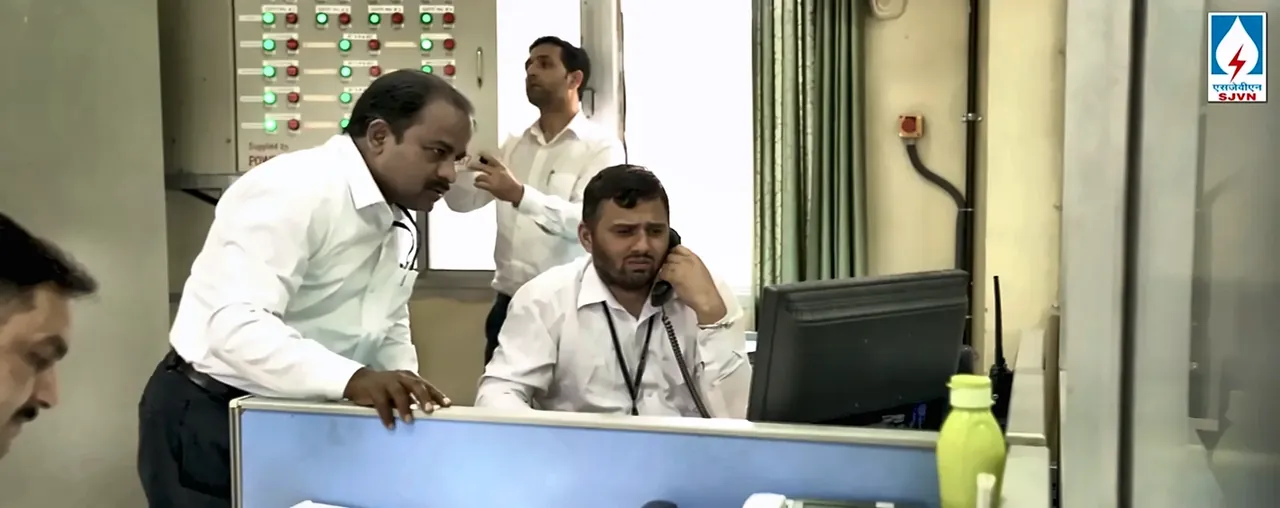
A real example: films for PSUs like SJVN and IRCON
Public-sector infrastructure films are among the most complex corporate films to make.
- Projects are spread across states such as Himachal Pradesh, Uttarakhand, Bihar and Kashmir. Our team first travels to each site and spends five to six days on the recce. We build the storyboard there, then prepare the equipment and crew to match the script.
- Weather decides the schedule. Snow, rain and wet soil can stop a shoot, so we plan which season and conditions suit each site.
- The project’s work comes first. We never disrupt the departments working on site. If our shoot stopped their work, it would be a failure.
- Leadership interviews need care. CMDs and directors know their company better than anyone: how it grew, how its processes work, what its numbers mean. But they are not on camera every day. We ask them to prepare their key facts, and we shape those into a script that fits the film. They read it on a teleprompter while we film calmly on prime lenses. The message stays theirs, nothing is misstated, and it takes very little of their time.
- Approvals happen at many levels. The proposal and script go to the CMD, the directors and often a board, and nothing begins until it is approved on paper. After the shoot there are more reviews, such as removing a figure or correcting a statement. This is why large PSU films take longer, and we stay patient and flexible through that whole journey.
Where companies waste money
- Changing the script after the shoot. It means a reshoot: the crew, equipment and people all come back, and the whole process repeats.
- Taking feedback from six or seven people with no final approver. Contradictory comments lead to endless edits. We help bring the feedback into one direction so the film gets final approval smoothly.
- “Show everything” thinking. A message that can be explained in 10 or 15 minutes does not need 40. Showing everything makes the film long, dull and expensive.
- Needing the film in the last week. Rushed work always costs more, because it means extra people, extra hours and extra hiring.
Where you should never save money
Script and research. A weak script cannot be rescued by an expensive camera. If the roots are weak, the tree falls no matter how tall it grows. Research, recce and scriptwriting are what separate a professional film from a quick event shoot.
Sound. Audiences will tolerate a slightly soft picture. They will not tolerate bad audio. Not every location is soundproof, and recording clean sound in public spaces and busy offices is a skill. Our team has years of experience recording podcasts, interviews and crowded public-opinion surveys.
Editing. A film is really made on the edit table. Shooting with a professional team and then handing the footage to a cheap editor wastes the whole investment.
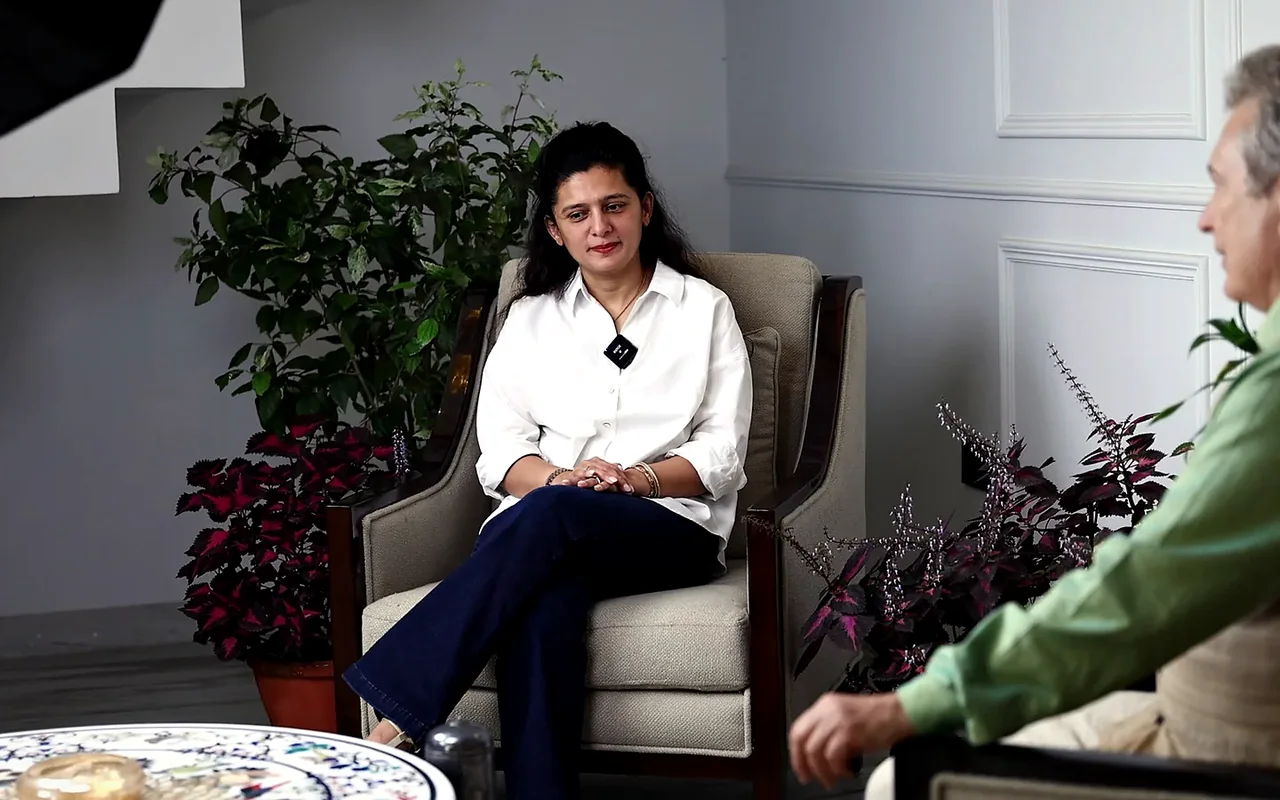
How to get a good film on a small budget
- One day, one location, a strong script.
- Two or three strong interviews, combined with your own existing footage and photos.
- Simple graphics that carry the message without unnecessary effects.
- Four or five short reels from the same shoot. Most people won’t watch a full film at first, but a 30-second reel creates interest and brings them to the full film. You get far more value from the same shoot.
How long does it take?
| Film | Typical time from brief to delivery |
|---|---|
| Short corporate video | 2–3 weeks |
| Mid-size corporate film | 4–6 weeks |
| Large PSU film | 6–12 weeks |
On large PSU films, most of that time goes into approvals, not the shoot.
What is included, and what is extra
Included in our quote: research, scriptwriting, the shoot (camera, lights, sound and crew), editing, colour grading, licensed broadcast-grade music cleared for films and TV, two rounds of changes, and a one-minute short version so you can announce the film.
Quoted separately, because every project is different: travel, drone permissions, actors (if a scene must be recreated) and additional language versions.
One piece of advice
Decide what you want the viewer to do or feel after watching your film. Then make the budget, not the other way round.
Who are you targeting, and what should they understand? Will this film bring business, investment, trust or awareness? Once the goal is clear, the budget follows.
Planning a corporate film? See our corporate video production work, or tell us about your project and we will suggest the right format and budget, so you spend only on what your film needs.
Frequently asked questions
How much does a corporate video cost in India?
A short 1–2 minute corporate video typically costs ₹75,000 to ₹2 lakh. A 3–5 minute film with several locations costs ₹2 lakh to ₹8 lakh, and large multi-state PSU films start around ₹8 lakh and can exceed ₹25 lakh.
How long does it take to make a corporate film?
Short videos take 2–3 weeks, mid-size films 4–6 weeks, and large PSU films 6–12 weeks, mostly because of approval stages.
What increases the cost of a corporate video the most?
The number of shoot days and locations, travel to remote sites, drone permissions, and post-production such as motion graphics, 3D and multiple language versions.
What is not included in a corporate video quote?
At Bintin Media, travel, drone permissions, actors and additional language versions are quoted separately because they vary by project.