
Many business owners, doctors, coaches and new creators tell me the same thing: “We are uploading videos, we even paid for promotion, but the channel is not growing.” In most cases the videos are fine. The problem is that they never reach the people who are looking for them.
That is what channel management solves. In this guide I answer the questions clients ask me most, with real examples from our work.
Want us to run your channel? See our YouTube channel management service: what is included, plans and a real result.
Who is writing this
I have worked in media for 22 years, as a writer, director and documentary filmmaker, and I have studied YouTube since its early days. I have watched its rules change many times. YouTube was once only for YouTubers. Today it is close to compulsory for every business, every service and every NGO.
To grow on YouTube, you have to understand how it decides what to show. YouTube works much like Google. It is a search engine. It reads your title, description, tags, chapters, captions, language and location, and it watches how people respond: likes, shares, comments and how long they keep watching. The thumbnail matters most, because it decides whether anyone clicks at all.
One podcast, twelve audiences
This is the method we use most, and it explains channel management better than any definition.
For a numerology client, we shot 11 podcasts. Each was about an hour long, with 12 to 15 segments, and each segment spoke to a different audience. If we uploaded only the full hour, most of those people would never find the part meant for them.
So we cut every segment into its own video, with its own title, description, tags and thumbnail, aimed at the people searching for that topic. The full podcast stays on the channel for those who want everything. Reels from the 3 to 5 best moments lead people to it.
For an astrologer client, one podcast covered Mangal dosh, Shani, remedies, marriage and relationships, and predictions. People who search “will a manglik get married” are not the same people who search for Shani remedies. Each part went to its own audience.
The same idea worked for a vastu consultant (beginner questions, the 16 directions, and devotional segments, each for a different viewer), for an educational institute (separate videos answering questions from students, parents and people asking about faculty and admissions), and for a Delhi restaurant, where the owner, a chef who had worked in Canada, told his own story alongside short videos on the food, hygiene and service.
After every video, we read the comments: what people liked, what they disliked, what they still want to know. That becomes the brief for the next script.
A real result
A spiritual organisation came to us with 200 to 300 videos and only a couple of thousand subscribers. Paid promotion had brought very few views. Titles and descriptions were copy-pasted, tags were random, thumbnails were weak and uploads were irregular.
We studied their audience, fixed titles, descriptions, tags and thumbnails, built a theme, added Shorts and highlights, and set a steady upload rhythm. In about two months the channel grew from roughly 3,000 to 6,000 subscribers. Eight months in, it is at around 45,000, and many viewers have also joined the organisation. We still manage the channel today.
The biggest fix was not one trick. It was consistency, plus finding the right audience and reaching it.
What YouTube channel management includes
Every month, the Bintin Media team handles:
- Planning: topics, what each video should answer, and how the episode is broken into segments.
- Scripting: written before the shoot, so the client’s time is not wasted.
- Shooting: in our studio or on location.
- Editing: the full video, segment videos and Shorts or Reels.
- Thumbnails: built on a consistent theme so viewers know what is inside at a glance.
- Titles and descriptions: written around the viewer’s question or problem.
- SEO: tags, chapters and captions so the video reaches the right searches.
- Uploading and scheduling.
- Shorts, community posts and cross-posting.
- Reports and the next month’s plan.
What we do not do: we do not replace your knowledge. You are the expert on your subject, whether you are an astrologer, numerologist, doctor, advocate or CA. Your facts must be complete and correct. We help you present them in the clearest way and get them to the right people.
Channel management is not video editing
You can have a beautifully edited video that just sits in your system because nobody sees it. Many people spend a lot on video and graphics and still get no reach. Management is the work of getting the video to people. A simple video that reaches the right audience will do better than an expensive one that reaches no one.
Do you need access to my channel?
Yes, we need Manager-level access. Many clients say, “Just take my login,” but we ask for Manager or Editor access only. The channel stays fully in your name and under your control; you remain the owner.
How we build a strategy for a new channel
First we understand the client: what they want to achieve, for whom, and what their audience searches for and wants to watch. Then we study the person who will be on camera: how fast they speak, their style, their comfort level.
Next comes the script. Most experts know their subject well, but many find the camera difficult and forget lines. So we finalise scripts before the shoot and use a teleprompter when needed. This saves the client’s time and makes editing faster. Then we shoot, edit, check, upload, schedule, monitor and keep the rhythm going.
How we pick topics
We look at what people are actually searching for, on Google, YouTube, Quora and other search engines, how many people search for it each month, and the related questions they ask next. We also study what other creators are making on the same topic. That research decides the content plan.
Long videos or Shorts?
Both. Shorts bring new viewers in. But if a viewer comes from a Short and finds no long video on the channel, they have nowhere to go. The long video is where trust is built. Shorts can also be shared on Instagram, Facebook, LinkedIn and X, which a full-length video cannot. Shorts, segments and the full video work as one chain.
How many videos does a business need?
For most businesses, three videos a week is a good start. You can slow down later, but every video must be meaningful. Posting more does not help; posting useful videos that answer what people are searching for does.
Views or leads?
Views alone do not pay the bills. Most businesses need leads and sales, and that needs its own plan: which topics attract buyers rather than casual viewers, and what the viewer should do next. We plan for both, depending on what the business needs.
Titles and thumbnails
Think of a newspaper. You read the headline first, and the picture next to it, before you decide to read the story. The title is your headline and the thumbnail is your picture. Together they decide whether anyone watches.
Can I start with just a phone?
Yes. Today’s phone cameras are good enough. What matters more is a good frame, the right distance, your eye level and a tidy background. The basic kit is a tripod and a wireless microphone, with mic settings matched to your space. If you are buying a phone for this, I recommend an iPhone; with other brands, control the ISO manually rather than leaving it on auto.
How do you make a nervous person look confident?
Almost everyone feels nervous in front of a camera. I have interviewed MDs, CMDs, doctors and advocates, and most are uncomfortable at first. As a director, I stay behind the camera like a friend. I talk to them, and keep the conversation on the topic so they forget the camera. Real content only comes out when the person is comfortable. This is our strength, and it comes from years of documentary work.
Script or bullet points? And the hook
In class 12, a teacher once told us not to write long paragraphs in exams. I asked her how she gave marks. She said, “I should understand the point quickly.” I wrote my next answer in bullet points and got full marks. I still use that lesson.
A script is simply a way of saying something clearly and briefly, in words that feel close to the viewer’s own life. For business videos, I turn long material into short, clear bullet points. When the message is short, it is understood, and it sells.
Studio or on location?
Our studio in Dwarka, Delhi, has lights, cameras and a teleprompter ready, so shoots move fast. On-location shoots cost more, but they show your real environment. For an institute with 12 faculty members, it is better to set up on campus and shoot everyone in one day. For senior guests such as embassy officials or busy executives, we set up at their office or hotel so they do not have to travel. Our portable setup operates from our Defence Colony office.
How YouTube SEO works in 2026
Say someone searches “how to make samosa at home”. YouTube matches that search with the title, description, tags, captions and chapters of uploaded videos. A video titled for a restaurant’s samosa will not show up for someone who wants to cook at home. YouTube also places your video in a category, such as food or street food, and shows it to people who watch that category. Chapters help too: each chapter can answer a different related question.
What does the algorithm reward?
Three things: click-through rate (did people click?), watch time (did they keep watching?) and returning viewers (did they come back?). Returning viewers are the strongest sign that you are showing the right content to the right audience.
Monetisation rules
Today, a channel needs 1,000 subscribers plus either 4,000 watch hours in the last 12 months, or 10 million Shorts views in the last 90 days, to earn from ads. From 1 February 2027, new applicants will need 1,000 subscribers plus 8,000 watch hours in 365 days or 20 million Shorts views in 90 days. A smaller tier at 500 subscribers unlocks fan funding features. (Check YouTube’s official page before you apply, as rules change.)
My advice: do not chase the number. If your content reaches the right people and they like it, the numbers follow.
Is buying subscribers or views ever okay?
Never. Suppose you buy 10,000 subscribers and your next video gets 200 views. YouTube reads that as: 10,000 people subscribed, but your content does not interest them. Your reach falls further. There is no shortcut. Honest, consistent work with the right SEO and the right audience is slower, but it lasts.
What to do when views suddenly drop
Do not panic. Something has changed, and it can be found. Think of it like a doctor’s visit: we audit the channel, find the cause and fix it.
Price range
| Plan | Price (per month) |
|---|---|
| Basic | from ₹25,000 |
| Standard | from ₹45,000 |
| Full management (strategy, scripting, shooting, editing, SEO, Shorts and reports) | ₹75,000 to ₹1,00,000+ |
The final price depends on how many videos you need each month.
Contract length and results
For an existing channel, give it at least three months. For a new channel, give it about eight months. Organic growth has no shortcut, and consistency matters more than anything.
Reports
Clients get a report every week, or after every two videos when volume is high: which keywords we are targeting, who is watching, what they are commenting and whether the audience matches the goal. If it does not, we change the strategy.
Channels outside India and in other languages
Yes. We work with channels outside India and in other languages. The algorithm reads behaviour, not just language.
How long to get the first 1,000 subscribers?
It depends on what you make, for whom, and whether it reaches them. Some channels get there in weeks, others take months. Do not aim for 1,000. Aim for the audience your work deserves, and say what you have to say clearly and confidently.
Is it too late to start a YouTube channel in 2026?
No. If you have a clear idea, real knowledge and the will to keep going, you are not late.
Face or faceless?
For a business, a face builds trust. Show your founder, your team, your staff. People want to know who they are dealing with. Faceless channels can work for some topics, but for a business I recommend starting with a face.
What works for Indian businesses?
Indian buyers respond to value: clear offers, product demos, tutorials and useful information about what you sell. Teach, show and explain.
How do you turn one long video into Shorts, Reels and LinkedIn clips?
Take the main points and conversations, and summarise them into 1, 2 or 3 minute pieces. This is a skill of both direction and editing. Whoever can summarise content well is the best content writer, and this is one of the strongest tools on social media today.
Hindi, English or Hinglish?
Whatever your audience is most comfortable with. Many viewers mix Hindi and English. For corporate and B2B audiences, English usually works better. If you are unsure, test two or three videos and follow what your analytics show.
Which analytics should I check first?
Who is watching (age, location), watch time, and which part of the video is watched most. Comments also tell you what people want next.
Playlists, end screens and pinned comments
Very important. Playlists work like a web series: a new viewer can start from the beginning. End screens should point to your most-watched or most recent videos. Pinned comments can answer common questions.
Should a business run YouTube ads?
Yes, with a clear plan. If you run an institute, place your ads on videos that your future students already watch. Choose skippable or non-skippable ads based on the goal, and decide where in the video the ad appears.
Can AI tools be used?
Yes, if you have the right licence and there is no copyright problem. Use them carefully and learn to prompt well.
Copyright and music
We use only licensed music, and we also produce original music. We do not use music we do not have rights to. One copyright claim can ruin a video.
Can a dead channel be revived?
Yes. Like a patient, the channel first gets a full diagnosis: why it stopped growing, what went wrong. Then we fix those problems and restart.
In-house team or agency?
An in-house team needs supervision and usually works within a limited scope. An agency brings experience from many clients and businesses, its own infrastructure and a creative environment.
Questions to ask before hiring any YouTube agency
- Which clients have you worked with, and what problems did you solve for them?
- What is your strategy for my business goal, not just for subscribers?
- What will you report to me, and how often?
- Who owns my channel? (Always you.)
- What will you not do?
Want help with your channel? Talk to the Bintin Media team in New Delhi. Call or WhatsApp +91 93191 94130, email contact@bintinmedia.com, or discuss your project.
Plans, inclusions and a case study: YouTube channel management by Bintin Media →
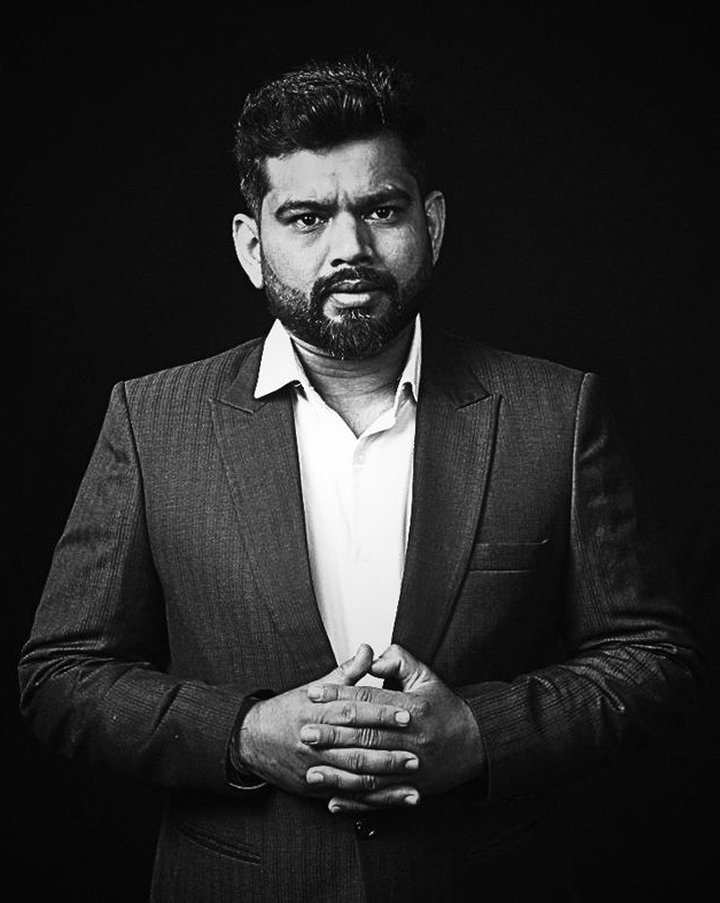
Founder and Director of Bintin Media. Writer, filmmaker and journalist with 22 years in television and documentary, including creative head and content writer on Colors TV’s Na Aana Is Des Laado. Director of the documentary Bharat Ek Vishwaguru and corporate films for PSUs. More about us · LinkedIn.